
The Big Ten’s pecking order continues to shift as the second week of the college basketball season comes to a close.
Michigan State takes over the top spot following its impressive 79–73 victory over No. 2 Duke in the Champions Classic, while UCLA climbs to No. 2 after following its statement win over Arizona with a historic 106–37 demolition of Arkansas-Pine Bluff.
Illinois slips three spots after suffering its first loss at Texas Tech and struggling through another uneven first half in its next outing. USC moves into the top three, while undefeated Nebraska holds its position ahead of Indiana.
Elsewhere, Minnesota continues its early climb following an impressive road victory over Cincinnati, Ohio State drops after its loss to UConn, and Maryland moves up despite another defeat after giving No. 6 Virginia all it could handle.
Here is how TerrapinHoops ranks all 18 Big Ten teams following games through Sunday, November 15.
1. Michigan State (4–0)
Previous ranking: 2 (↑1)
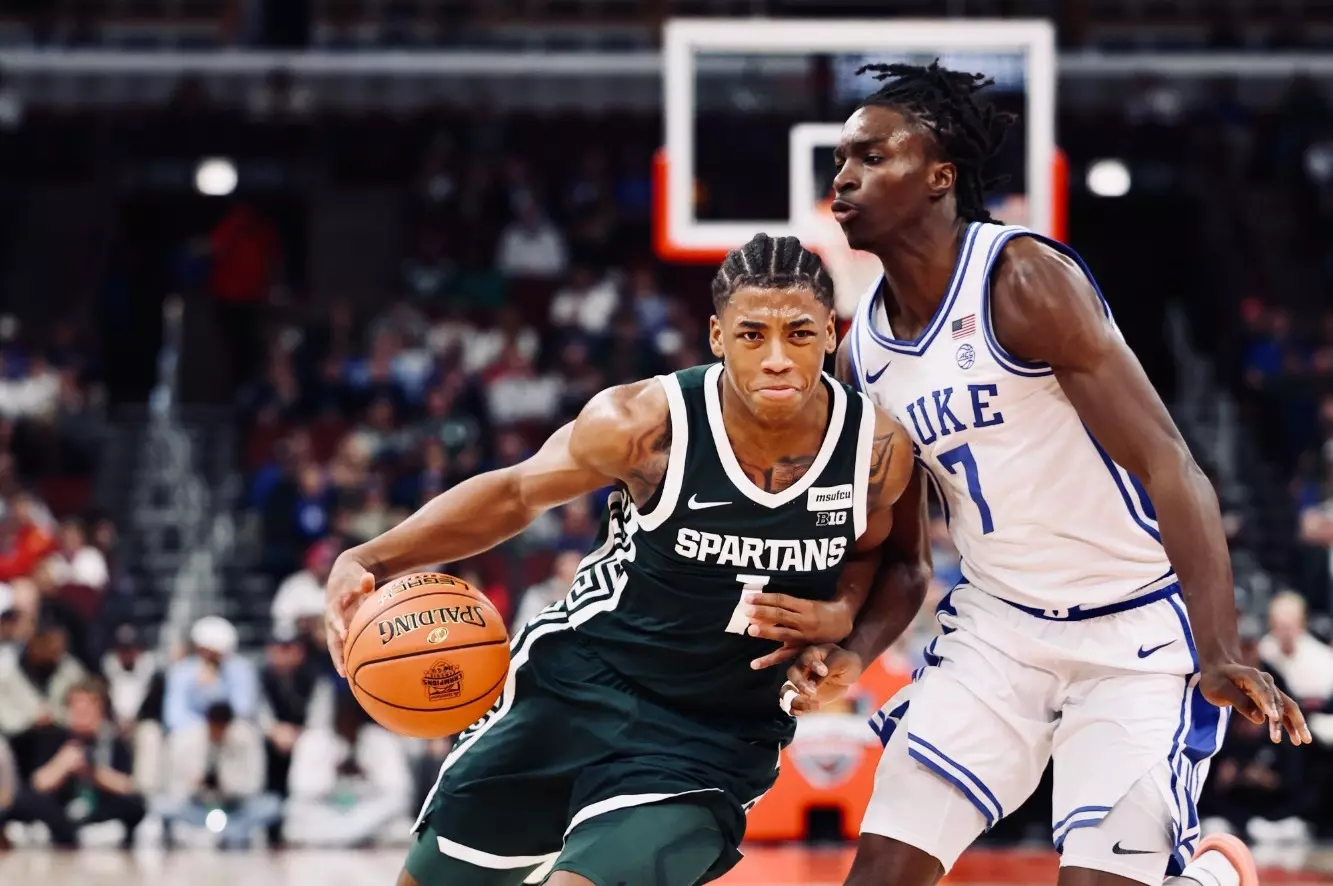
Tom Izzo’s Spartans have earned the top spot after delivering arguably the conference’s most impressive victory of the season, knocking off No. 2 Duke, 79–73, in the Champions Classic. Jeremy Fears Jr. was outstanding, finishing with 18 points and 11 assists while controlling the tempo against one of the nation’s most talented teams. Michigan State has demonstrated the defensive toughness, offensive balance and veteran leadership necessary to compete for a Big Ten championship. The Spartans have the best résumé in the conference through two weeks.
2. UCLA (3–0)
Previous ranking: 3 (↑1)
The Bruins have a legitimate argument for No. 1. Their victory over Arizona remains one of the best wins in college basketball, and Mick Cronin’s team followed it with a historic 106–37 demolition of Arkansas-Pine Bluff. The 69-point margin was the largest in UCLA history. The Bruins have now scored at least 100 points in consecutive games and appear to have the combination of talent, depth and defensive toughness necessary to compete for a national championship. For now, Michigan State’s victory over Duke gives the Spartans the slightest edge.
3. USC (4–0)
Previous ranking: 4 (↑1)
USC continues to look like one of the Big Ten’s most explosive offensive teams. The Trojans have averaged nearly 97 points through four victories, including an impressive 77–65 road win over California. Alijah Arenas has provided the star power, and Eric Musselman’s team has demonstrated the ability to score in a variety of ways. There are still questions about the Trojans’ defensive consistency, but their undefeated start and quality road victory are enough to move them into the top three.
4. Illinois (3–1)
Previous ranking: 1 (↓3)
Illinois might still have the highest ceiling in the Big Ten, but the Illini haven’t played well enough to maintain the top spot. Brad Underwood’s team fell behind by 20 points at Texas Tech before rallying in an 84–78 loss, then struggled through another uneven first half in its next home game. Illinois remains an offensive powerhouse, averaging more than 100 points per game, and its talent and depth are undeniable. But the slow starts and defensive inconsistency have become concerning enough to warrant a temporary drop.
5. Michigan (3–1)
Previous ranking: 5 (—)
The Wolverines have responded well to their loss against UConn, including an impressive 84–70 victory over Marquette. Michigan has shown plenty of offensive firepower and has already faced a considerably more demanding schedule than most of its conference rivals. The Wolverines remain firmly among the Big Ten’s upper-tier teams, but the loss to UConn and the impressive victories collected by the teams above them leave Michigan at No. 5 for another week.
6. Nebraska (4–0)
Previous ranking: 6 (—)
Nebraska continues to look like one of the conference’s most balanced teams. The Cornhuskers have remained unbeaten while demonstrating the ability to win with both offensive production and defensive execution. Braden Frager’s career-high 26-point performance against Boise State provided another encouraging sign for Fred Hoiberg’s team. Nebraska’s neutral-site victory over Providence also gives the Huskers a quality early result. Indiana is making a push, but Nebraska has done enough to maintain its position at No. 6.
7. Indiana (4–0)
Previous ranking: 7 (—)
The Hoosiers continue to impress under Darian DeVries, improving to 4–0 with an 83–80 victory over Syracuse. That was Indiana’s most meaningful test of the young season, and the Hoosiers demonstrated they can execute in a competitive game rather than simply overwhelm inferior opponents. Indiana has shown encouraging offensive balance and is averaging nearly 90 points per game. The Hoosiers are closing the gap on Nebraska, but the Cornhuskers retain the slight edge for now.
8. Minnesota (4–0)
Previous ranking: 10 (↑2)
Minnesota is becoming one of the Big Ten’s most intriguing early-season stories. The Golden Gophers went on the road and defeated Cincinnati, 63–61, delivering the kind of quality victory that can dramatically change expectations for a program. Niko Medved’s team followed that performance with another comfortable win and has been particularly impressive defensively, allowing just 58.5 points per game. Minnesota has already demonstrated more than enough to move into the conference’s top eight.
9. Wisconsin (4–0)
Previous ranking: 12 (↑3)
Wisconsin has quietly put together an impressive undefeated start, winning its first four games while allowing fewer than 64 points per contest. The Badgers’ 89–42 demolition of Fairfield was their most convincing performance yet, showcasing the defensive discipline and efficiency that have traditionally defined the program. The schedule hasn’t been particularly demanding, but Wisconsin has handled its business and deserves a significant jump after some uneven performances from teams previously ranked above it.
10. Oregon (3–0)
Previous ranking: 11 (↑1)
The Ducks remain unbeaten and have been one of the conference’s most productive offensive teams, averaging 95 points per game. Oregon reached the century mark against Mississippi Valley State and has shot exceptionally well through its first three outings. The competition hasn’t been particularly challenging, which makes it difficult to determine just how much the Ducks have improved. Nevertheless, Oregon has done enough to move into the top 10.
11. Iowa (2–2)
Previous ranking: 8 (↓3)
Iowa takes a step backward after an uneven second week that included an overtime loss to Virginia Tech. The Hawkeyes were impressive defensively during their first two games, but the offense hasn’t been nearly as consistent against stronger competition. Iowa remains capable of competing in the middle of the conference, but its early results don’t justify keeping the Hawkeyes ahead of several undefeated teams that have demonstrated greater consistency.
12. Ohio State (2–2)
Previous ranking: 9 (↓3)
Ohio State had an opportunity to make a major statement against No. 4 UConn but instead suffered an 84–68 defeat. The Buckeyes were competitive for a half before the Huskies pulled away, exposing some of the defensive concerns that surfaced in Ohio State’s earlier loss to BYU. The Buckeyes have enough offensive talent to challenge quality opponents, but allowing nearly 80 points per game isn’t a recipe for sustained success. Ohio State needs to show considerable improvement defensively before climbing back into the top 10.
13. Purdue (2–2)
Previous ranking: 13 (—)
Purdue has steadied itself after a disastrous opening week, winning consecutive games following losses to Gonzaga and Valparaiso. The Boilermakers defeated Illinois State, 76–59, in their latest outing, but the victories haven’t been convincing enough to erase the concerns created by their 0–2 start. Matt Painter’s team continues to search for more consistent offensive production, particularly from the perimeter. Purdue has taken steps in the right direction, but it still has plenty to prove.
14. Maryland (1–2)
Previous ranking: 16 (↑2)
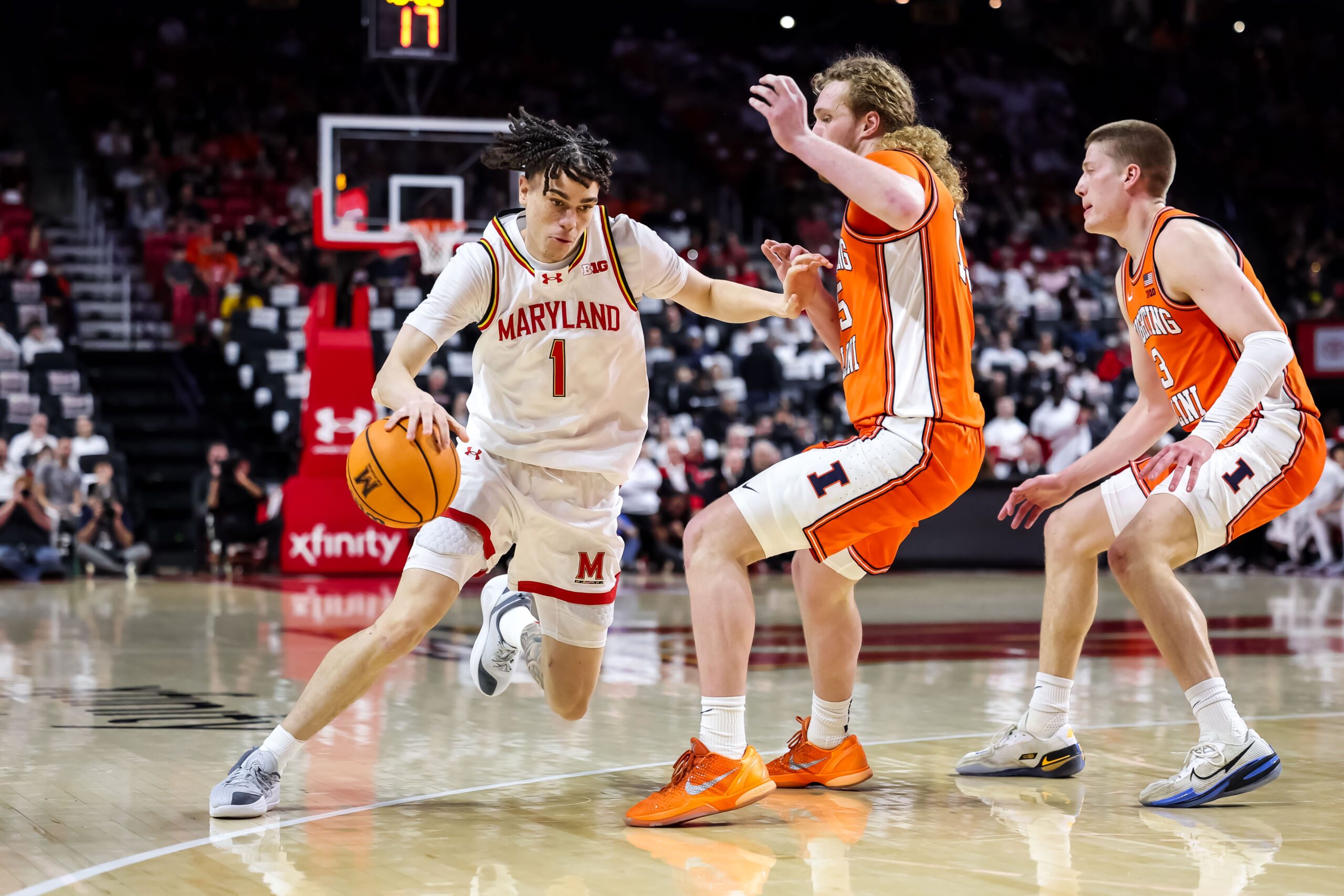
Maryland moves up two spots despite suffering its second consecutive defeat, and there’s a reasonable argument that the Terrapins deserve the bump.
Buzz Williams’ team led No. 6 Virginia by 11 points at halftime Friday night before falling 87–83 in Charlottesville. It was easily Maryland’s most encouraging performance of the young season, particularly after the disappointing 86–74 loss at Georgetown.
That Georgetown defeat also looks somewhat different now. The Hoyas followed it with a victory over Clemson, suggesting Maryland’s loss in the District might not have been as damaging as it initially appeared.
The Terrapins remain an outstanding offensive rebounding team, but their perimeter shooting and defensive consistency continue to be major concerns. Maryland still has considerable work to do, but the performance against Virginia provided evidence that the Terps are capable of competing against quality opponents.
15. Washington (2–0)
Previous ranking: 14 (↓1)
Washington remains undefeated, but the Huskies have played only two games and haven’t faced the same level of competition as several teams around them. There have been encouraging offensive signs, but the limited schedule makes Washington particularly difficult to evaluate. The Huskies drop a spot primarily because Maryland’s competitive performance against Virginia provided a more meaningful indication of its potential.
16. Northwestern (3–1)
Previous ranking: 15 (↓1)
Northwestern has been competitive defensively, but the Wildcats continue to struggle to generate consistent offense. Chris Collins’ team has averaged just over 70 points per game and suffered its first loss of the season. Northwestern has enough discipline and defensive ability to remain competitive, but the Wildcats need considerably more scoring production before moving higher in the rankings.
17. Rutgers (3–0)
Previous ranking: 17 (—)
Rutgers remains unbeaten and has been impressive defensively, allowing just over 56 points per game. The Scarlet Knights also demonstrated some offensive potential in a 101-point performance against NJIT. But the schedule hasn’t provided a meaningful test, making it difficult to determine whether Rutgers has addressed the offensive limitations that have held the program back. The Scarlet Knights remain at No. 17 until they demonstrate more against stronger competition.
18. Penn State (4–1)
Previous ranking: 18 (—)
Penn State has bounced back from its early loss to Pittsburgh and improved to 4–1, but the Nittany Lions haven’t produced the kind of victory that would justify moving them out of the bottom spot. Their 72–57 win over Mercyhurst was a step in the right direction, particularly defensively, but significant questions remain about their ability to compete consistently against Big Ten opponents. Penn State needs a more convincing result before moving up.
Looking Ahead
The Big Ten’s early hierarchy is beginning to take shape, with Michigan State and UCLA establishing themselves as legitimate national championship contenders. USC and Illinois remain close behind, while Michigan, Nebraska and Indiana have demonstrated enough to remain firmly in the conference’s upper tier.
The biggest surprises have come from Minnesota and Wisconsin, both of which have climbed into the top 10 after impressive undefeated starts.
Meanwhile, Purdue, Ohio State and Iowa have struggled to meet early expectations, and Maryland remains a work in progress despite showing encouraging signs against Virginia.
Two weeks into the season, there’s still plenty of time for the order to change. But the gap between the conference’s early contenders and the teams trying to find their footing is already becoming apparent.