
One week into the 2026–27 college basketball season, the Big Ten’s pecking order is already beginning to change.
UCLA delivered one of the conference’s biggest opening-week statements with a victory over nationally ranked Arizona, establishing itself as a legitimate national championship contender. Illinois looked every bit like the offensive powerhouse many expected, while Michigan State opened with an impressive performance of its own.
Elsewhere, the early returns were considerably less encouraging.
Purdue stumbled out of the gate with losses to Gonzaga and Valparaiso, the latter coming at Mackey Arena. Maryland followed an encouraging opening-night victory over Bucknell with a disappointing 86–74 loss at Georgetown, exposing concerns about the Terrapins’ ability to compete against more talented opponents.
The result is plenty of movement in this week’s rankings, including significant changes throughout the middle and lower portions of the conference.
Here is how TerrapinHoops ranks all 18 Big Ten teams following the opening week of the season.
1. Illinois (2–0)
Previous ranking: 1 (—)
The Fighting Illini have done nothing to relinquish the top spot. Brad Underwood’s team opened with a 120–45 demolition of Fairleigh Dickinson before putting up another 112 points against Penn. Illinois connected on a school-record 19 three-pointers in its opener and has demonstrated the kind of offensive firepower that could make it one of the most dangerous teams in the country. Andrej Stojakovic scored 25 points against Penn, while the Illini’s depth and perimeter shooting have been particularly impressive. A road matchup with Texas Tech this week will provide a much better indication of just how good this team can be.
2. Michigan State (2–0)
Previous ranking: 2 (—)
Tom Izzo’s Spartans remain firmly among the conference favorites after an impressive opening week. Michigan State overwhelmed Toledo, 91–61, with Jeremy Fears Jr. continuing to establish himself as one of the nation’s premier point guards. Fears is averaging a double-double in points and assists through the Spartans’ first two games, and his ability to control the offense gives Michigan State a reliable foundation. The Spartans will face a considerably more difficult challenge against Duke in the Champions Classic, a matchup that could help determine whether they deserve consideration for the top spot.
3. UCLA (2–0)
Previous ranking: 4 (↑1)
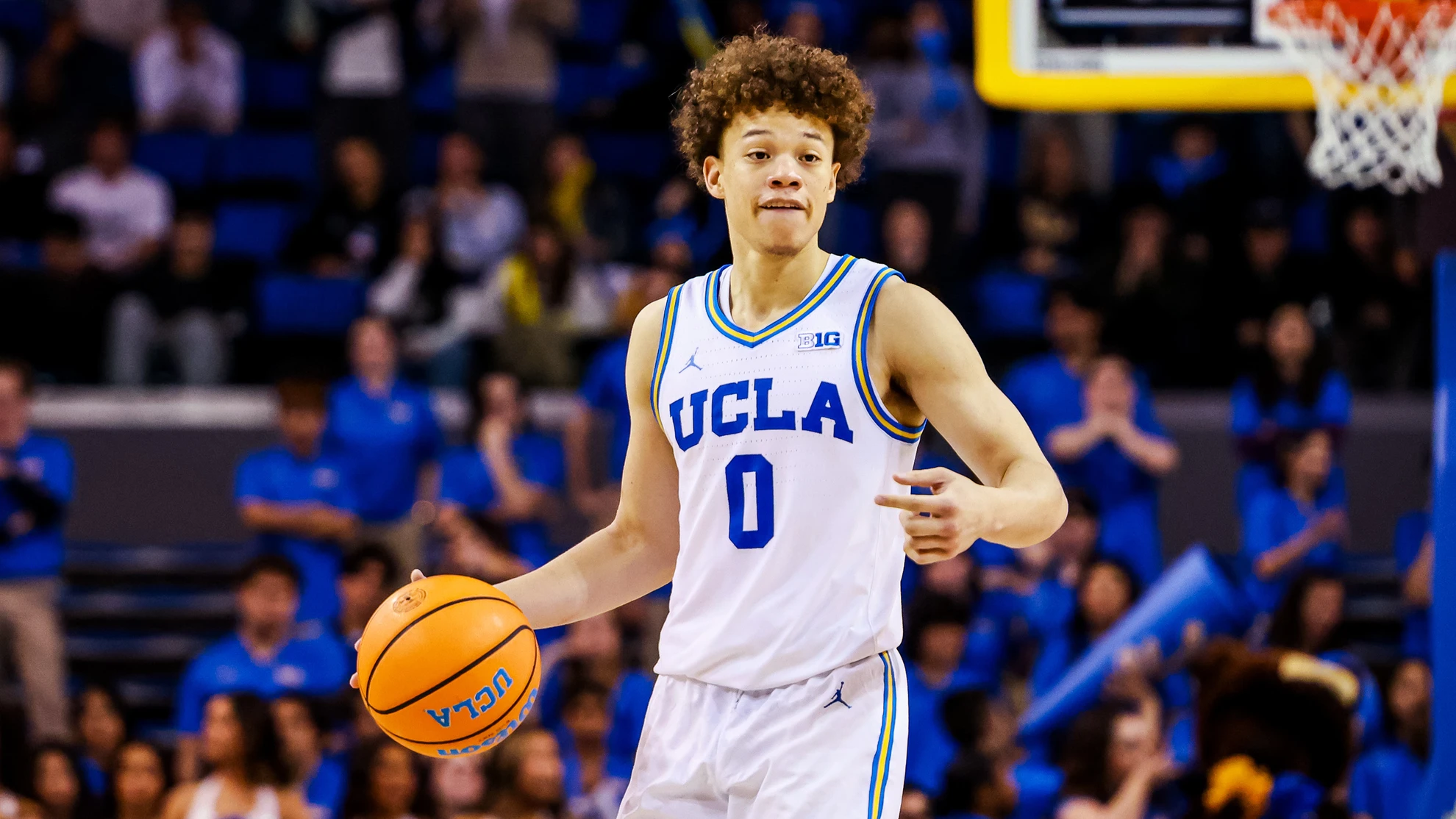
The Bruins made arguably the biggest statement of any Big Ten team during opening week, knocking off No. 5 Arizona, 84–75, in Las Vegas. It was precisely the kind of victory that changes expectations for a program. Mick Cronin’s team followed with a 114–63 rout of North Florida, highlighted by a spectacular performance from freshman Nikola Kusturica, who scored 29 points, including 26 in the first half. UCLA appears to have the combination of talent, depth and defensive toughness necessary to compete with the country’s elite. After the Arizona victory, the Bruins deserve to be discussed as legitimate national championship contenders.
4. USC (2–0)
Previous ranking: 3 (↓1)
The Trojans haven’t done anything particularly wrong, but UCLA’s impressive victory over Arizona warrants a change in the order. USC opened with a convincing 95–63 win over Milwaukee before surviving a tougher-than-expected challenge from Wichita State, 93–86, on Sunday. The Trojans have shown plenty of offensive ability, although allowing Wichita State to remain competitive suggests there are still some defensive issues to address. USC remains one of the Big Ten’s most talented teams and a serious contender near the top of the conference.
5. Michigan (1–1)
Previous ranking: 5 (—)
Michigan’s 85–77 loss to No. 4 UConn in Boston shouldn’t be viewed as a major setback. The Wolverines were competitive against one of the nation’s best teams, with Trey McKenney scoring a career-high 22 points, all in the second half. J.P. Estrella added 19 points and Roddy Gayle Jr. contributed 18. Michigan opened the season with an 84–68 victory over Oakland and has already faced a considerably more demanding test than most of its conference rivals. The Wolverines remain firmly in the upper tier of the Big Ten.
6. Nebraska (2–0)
Previous ranking: 6 (—)
Nebraska quietly put together one of the conference’s more encouraging opening weeks. The Cornhuskers demolished Le Moyne, 106–64, before earning a solid neutral-site victory over Providence, 67–58. Pryce Sandfort was outstanding against the Friars, scoring 25 points on 9-of-14 shooting. Fred Hoiberg’s team has demonstrated an ability to win in different ways, following an explosive offensive performance with a more physical, defensive-minded victory. Nebraska looks capable of remaining in the upper half of the conference throughout the season.
7. Indiana (2–0)
Previous ranking: 9 (↑2)
The Hoosiers have looked sharp in their first two outings, opening with a 91–57 victory over Eastern Illinois before defeating Bellarmine, 92–69. Indiana has shown good offensive balance and has taken care of business against opponents it was expected to beat. There are still questions about how the Hoosiers will perform against stronger competition, but the early returns have been encouraging enough to move them up two spots. Indiana has an opportunity to establish itself as a legitimate contender in the conference’s upper half.
8. Iowa (2–0)
Previous ranking: 11 (↑3)
Iowa has been one of the more impressive teams in the conference through the opening week. The Hawkeyes defeated Lipscomb, 76–54, before overwhelming Eastern Illinois, 91–47. The defensive performances have been particularly encouraging, with Iowa allowing just 101 combined points across its first two games. The Hawkeyes haven’t faced an elite opponent, but they’ve looked organized, efficient and comfortable at both ends of the floor. That earns them a three-spot jump.
9. Ohio State (1–1)
Previous ranking: 7 (↓2)
Ohio State opened its season with a difficult assignment against BYU in Salt Lake City and came away with a 94–83 loss. The Buckeyes responded with a convincing 89–65 victory over Youngstown State, but the opening defeat raises questions about their defensive consistency. Ohio State has enough offensive talent to compete with most teams in the conference, although it needs to demonstrate that it can get stops against high-level competition. The Buckeyes slide two spots for now, with plenty of time to recover.
10. Minnesota (2–0)
Previous ranking: 13 (↑3)
Minnesota has been a pleasant surprise through the opening week. The Golden Gophers cruised past North Dakota, 85–50, before defeating St. Thomas, 76–62. Neither opponent represents a particularly difficult test, but Minnesota has handled its early schedule comfortably and shown enough balance to warrant a move into the top 10. The Gophers still have considerable work to do before establishing themselves as a legitimate postseason contender, but the opening performances have been encouraging.
11. Oregon (2–0)
Previous ranking: 15 (↑4)
The Ducks are one of this week’s biggest risers after opening with consecutive convincing victories. Oregon defeated Montana, 87–69, before rolling past Eastern Washington, 98–71. The Ducks have been productive offensively and appear more comfortable than their preseason ranking suggested. The competition hasn’t been especially demanding, so it’s too early to declare Oregon a contender in the upper half of the conference. Still, the Ducks have done enough to earn a four-spot climb.
12. Wisconsin (2–0)
Previous ranking: 12 (—)
Wisconsin remains undefeated, but the Badgers haven’t exactly overwhelmed their early opponents. A 75–68 victory over Denver was followed by a 73–64 win against Delaware, with both games remaining competitive longer than expected. The Badgers have shown their usual ability to execute in the half court, but the narrow margins against inferior competition raise concerns about their offensive ceiling. Wisconsin remains a difficult team to evaluate until it faces a stronger opponent.
13. Purdue (0–2)
Previous ranking: 10 (↓3)
It’s difficult to imagine a more disappointing opening week for the Boilermakers. Purdue began with a competitive 78–72 loss to Gonzaga in Las Vegas, a result that wouldn’t ordinarily warrant much concern. But Friday’s 83–80 home loss to Valparaiso was another matter entirely. Losing to an in-state mid-major opponent at Mackey Arena is a significant early-season setback for a program accustomed to competing near the top of the Big Ten. Matt Painter has earned the benefit of the doubt given his track record, and Purdue still has time to turn things around. Nevertheless, an 0–2 start that includes a home loss to Valparaiso demands a meaningful drop in the rankings.
14. Washington (1–0)
Previous ranking: 14 (—)
Washington opened its season with a 90–76 victory over Colgate, a respectable performance that provided an early look at the Huskies’ offensive potential. The Huskies showed an ability to score, but one game against a Patriot League opponent isn’t enough to dramatically alter expectations. Washington remains in the lower half of the rankings until it demonstrates that it can compete consistently against stronger competition.
15. Northwestern (2–0)
Previous ranking: 17 (↑2)
Northwestern has quietly taken care of business to open the season. The Wildcats defeated Binghamton, 86–60, before earning a 78–65 victory over Stony Brook. Neither result will attract much national attention, but Northwestern has avoided the early-season problems that have plagued several other Big Ten programs. The Wildcats move up two spots, although their long-term outlook remains uncertain until they face a more challenging schedule.
16. Maryland (1–1)
Previous ranking: 8 (↓8)
Few teams in the conference experienced a more dramatic change in outlook during opening week than Maryland.
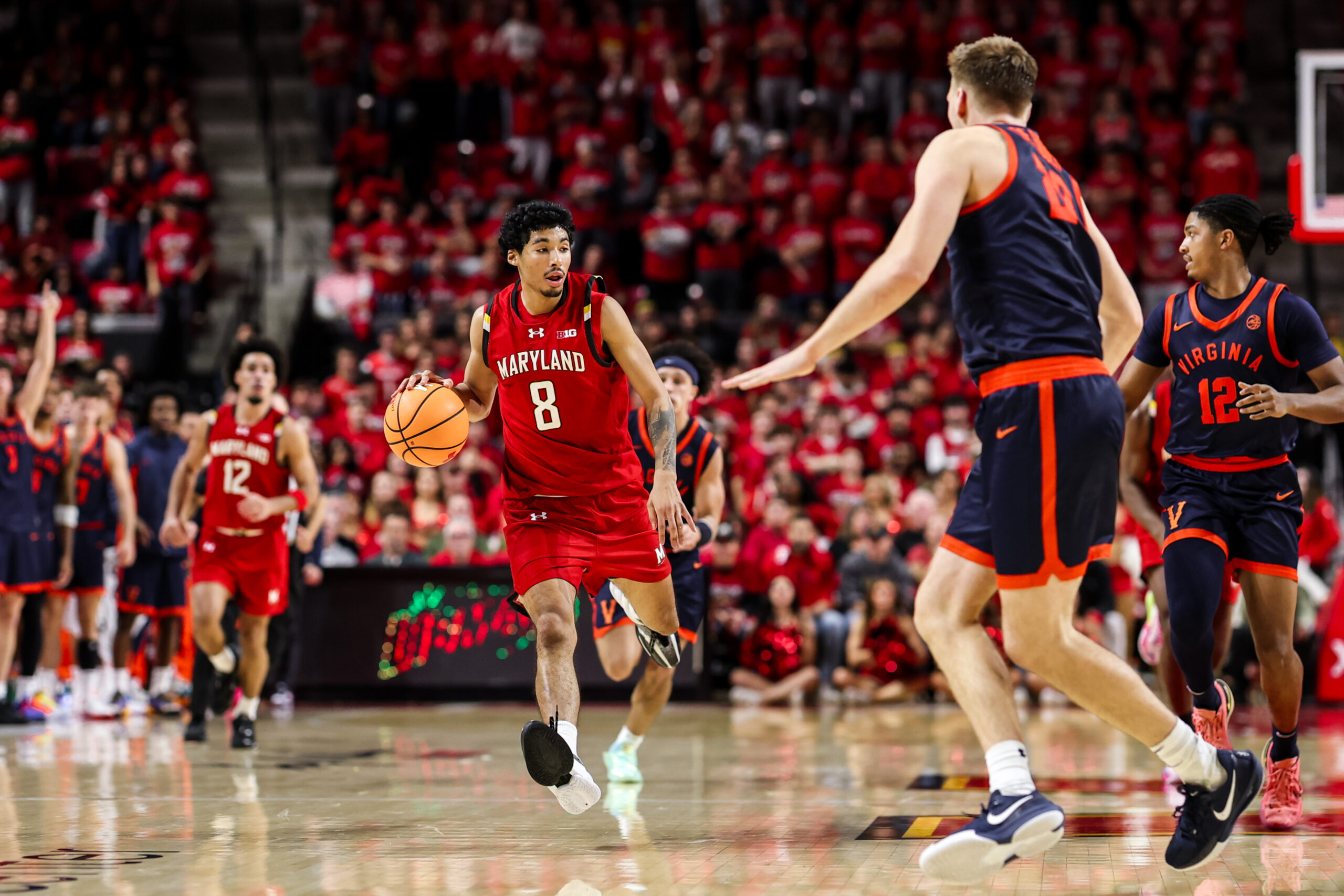
The Terrapins opened Buzz Williams’ second season with an encouraging 96–67 victory over Bucknell, displaying the physicality and rebounding emphasis that have become hallmarks of his coaching philosophy.
That optimism quickly faded Saturday afternoon in Washington.
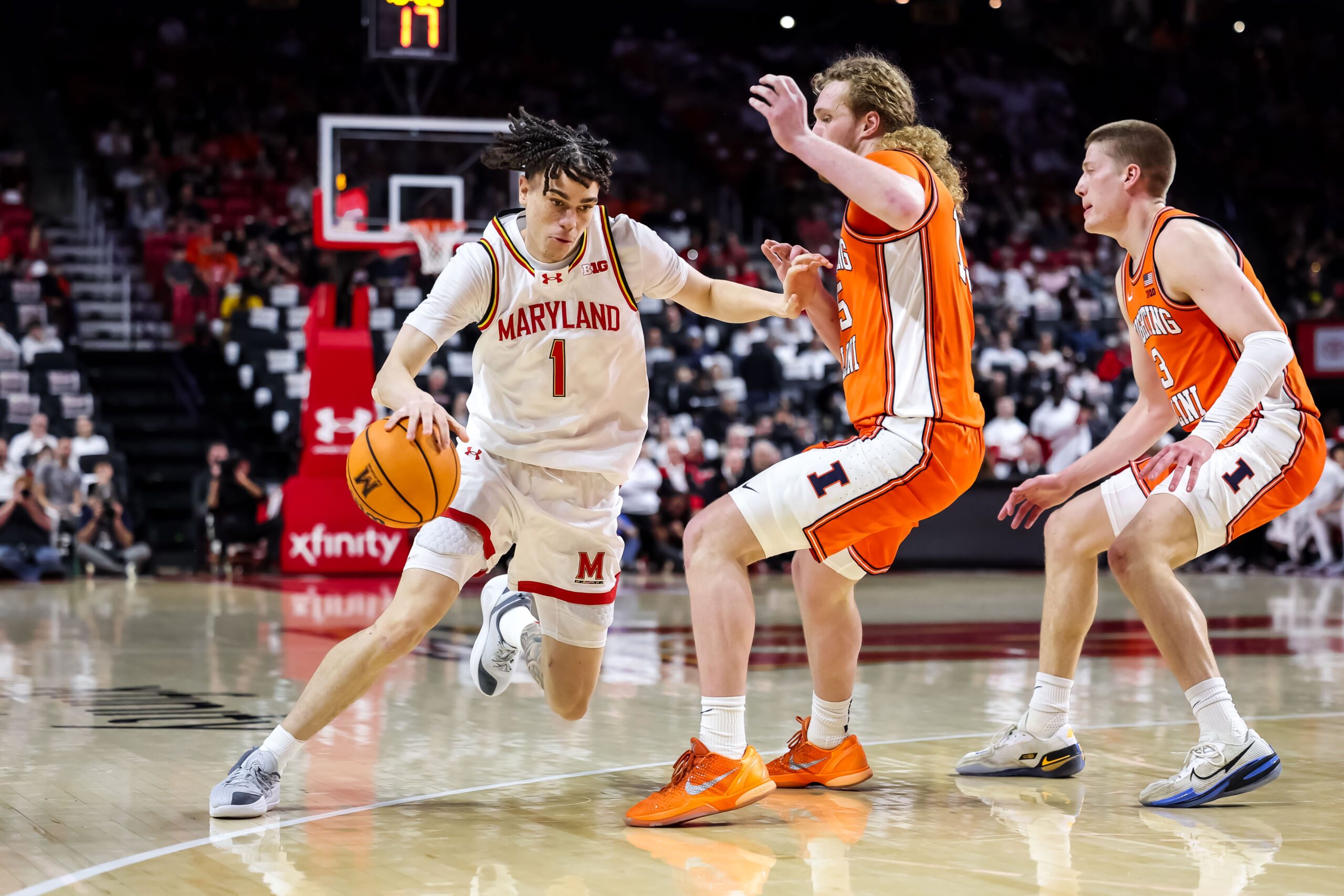
Maryland was thoroughly outplayed in an 86–74 loss to Georgetown, struggling to match the Hoyas’ execution and intensity in the renewal of the regional rivalry.
The defeat exposed significant concerns about the Terrapins’ perimeter defense, offensive consistency and ability to compete against more talented opponents.
There is still time for Maryland’s new-look roster to develop chemistry and improve, particularly with Williams continuing to establish his system in College Park.
But the Georgetown loss was a reminder that beating an overmatched opponent like Bucknell doesn’t necessarily translate into success against quality competition.
Maryland entered the season with questions surrounding its roster and overall talent level. After one week, those concerns appear more substantial than anticipated.
The Terrapins tumble eight spots to No. 16 and will need to demonstrate considerable improvement before climbing back into the conference’s middle tier.
17. Rutgers (1–0)
Previous ranking: 16 (↓1)
Rutgers opened with an 81–54 victory over New Haven, but there isn’t much to take away from a comfortable win against an overmatched opponent. The Scarlet Knights handled their business, although questions remain about whether they possess enough offensive firepower to compete consistently in the Big Ten. Rutgers drops one spot primarily because other teams have done more to improve their standing.
18. Penn State (2–1)
Previous ranking: 18 (—)
Penn State remains at the bottom after a difficult opening week. The Nittany Lions began with a 97–57 victory over Canisius before narrowly escaping Chattanooga, 97–93. Sunday’s 82–76 loss to Pittsburgh at the Palestra added another disappointing result. Penn State has demonstrated an ability to score, but its defensive struggles are already apparent. Allowing 93 points to Chattanooga and following that with a loss to Pitt raises significant concerns about the Nittany Lions’ ability to compete in conference play.
Looking ahead
The second week of the season should provide a much clearer picture of the Big Ten’s top contenders.
Michigan State faces No. 2 Duke in Chicago, while Illinois travels to No. 19 Texas Tech in two of the week’s most compelling nonconference matchups. Michigan also has an opportunity to rebound from its loss to UConn when it hosts Marquette.
For UCLA, the challenge will be sustaining the momentum generated by its impressive victory over Arizona. The Bruins have already established themselves as a team capable of competing with the nation’s best.
Meanwhile, Purdue and Maryland face a different kind of challenge.
Both programs entered the season with expectations of competing in the Big Ten’s upper half, but their opening-week performances have raised serious questions.
One week doesn’t define a season. It can, however, reveal which teams are ahead of schedule and which have considerably more work to do than anticipated.
For the Boilermakers and Terrapins, the early warning signs are impossible to ignore.