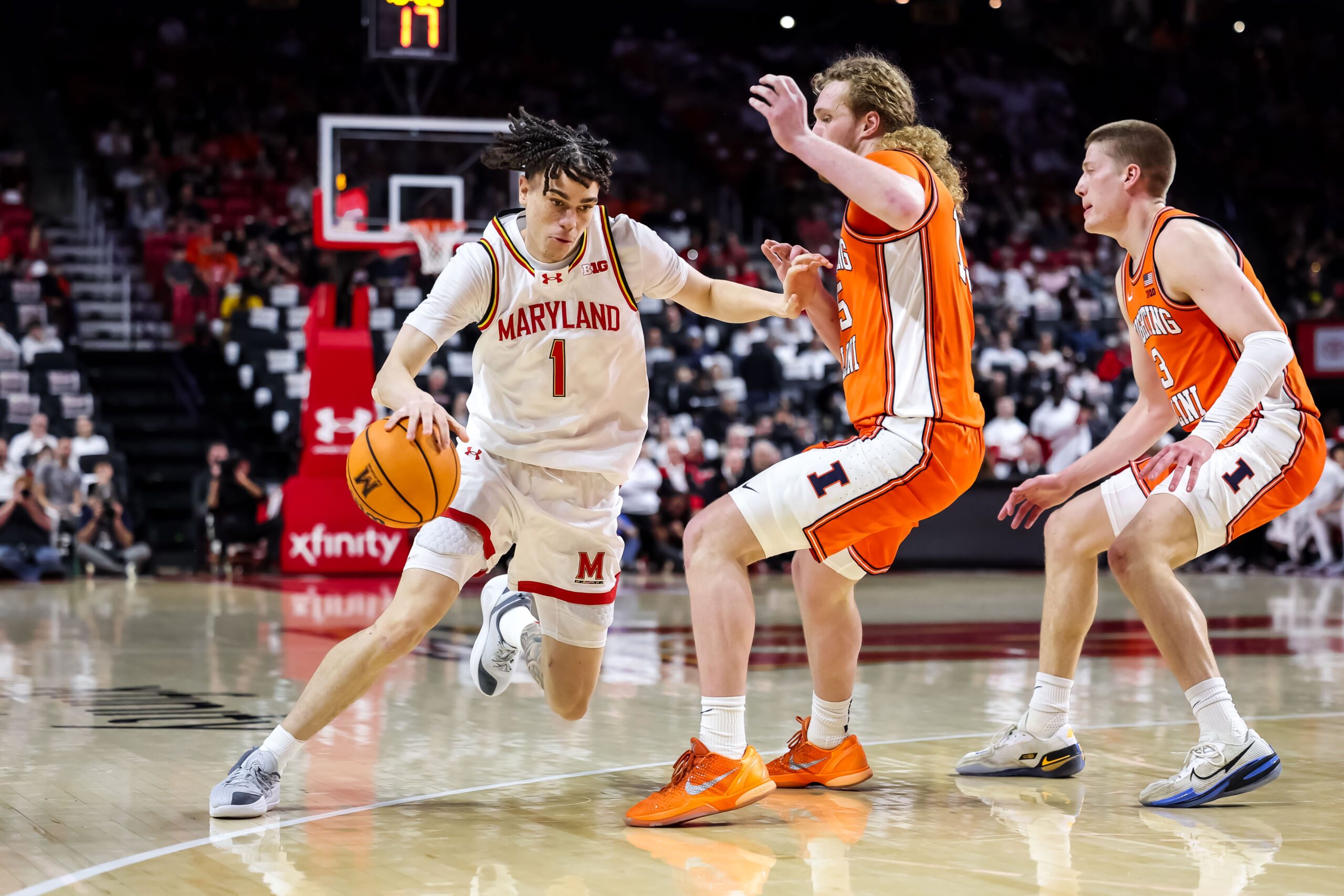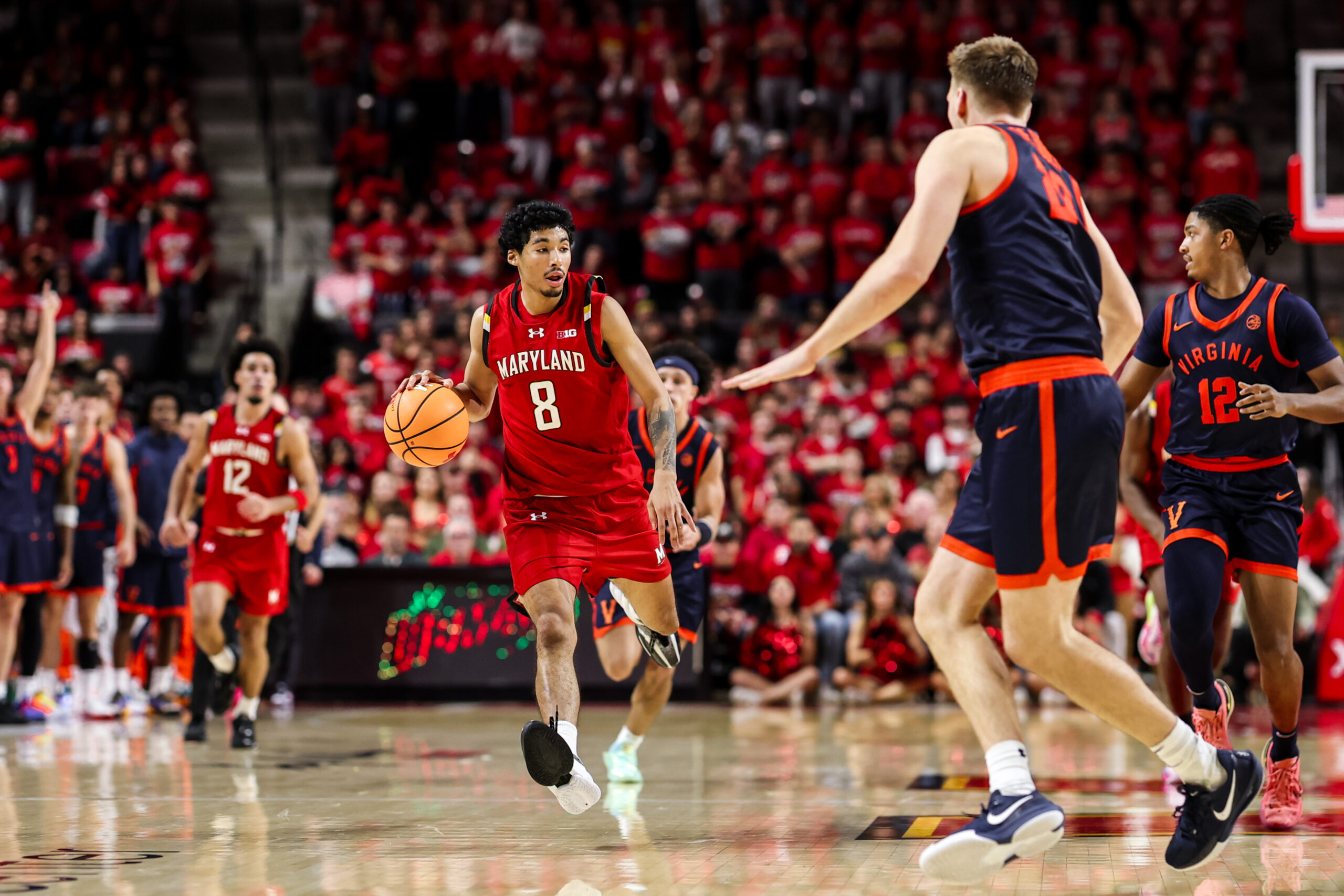

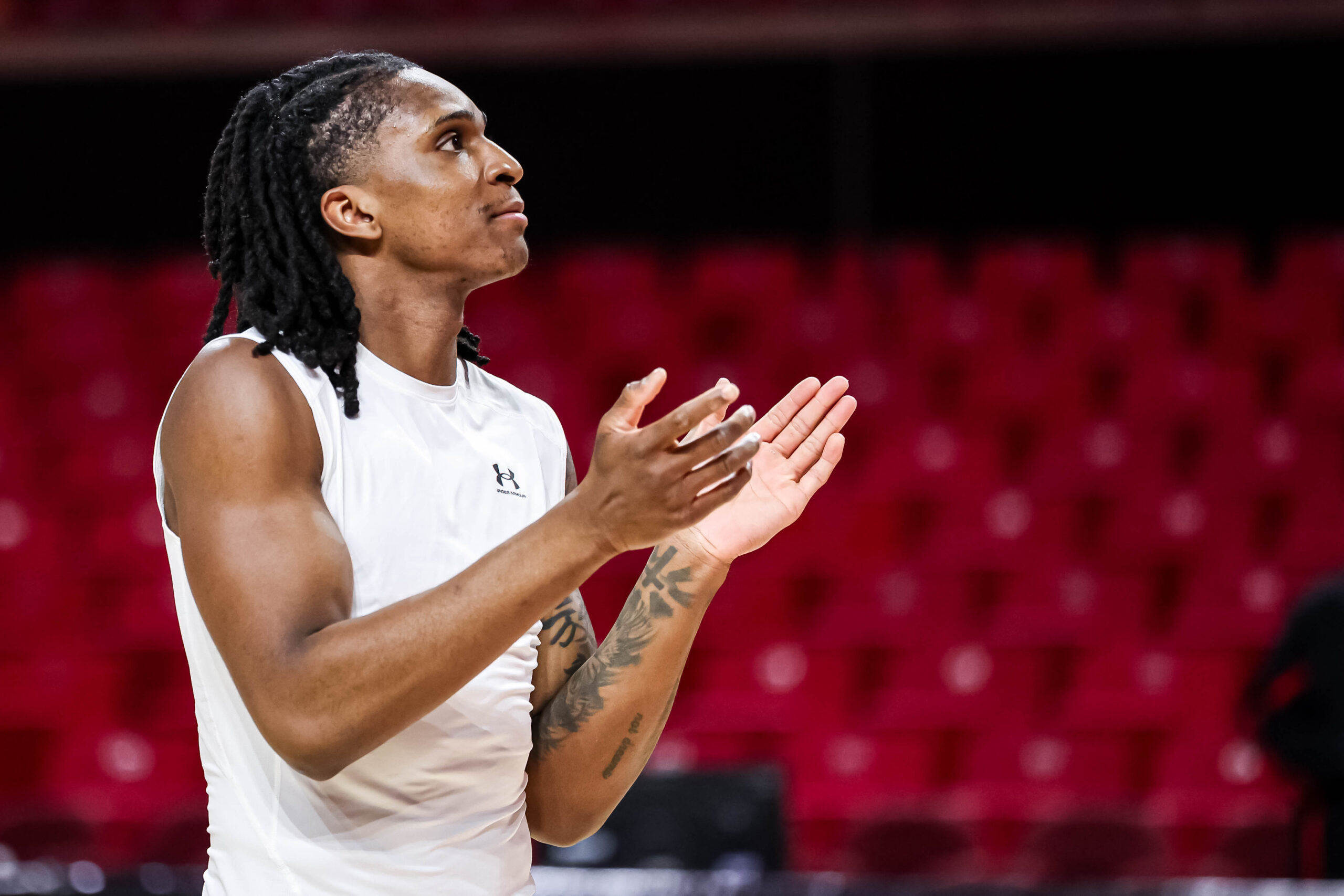
Maryland scored 96 points Monday night, won by 29 and put five players in double figures.
And Buzz Williams still saw plenty that needs fixing.
That might be the most encouraging takeaway from Maryland’s 96-67 season-opening win over Bucknell.
The Terrapins weren’t particularly sharp early. Bucknell’s changing zones caused problems. Maryland occasionally played too fast, the ball stuck at times and a team featuring a number of new pieces looked exactly like that during stretches of the first half.
But Maryland also showed why this roster could be difficult to deal with as the season progresses.
The Terps were bigger, deeper and considerably more physical than Bucknell. They dominated the glass, repeatedly created additional possessions and eventually turned a competitive opening 13 minutes into a rout.
“I thought the energy was great,” Williams said. “There was a lot of first-game jitters.”
Maryland led just 23-22 before closing the first half on a 21-8 run to take a 44-30 advantage into the locker room. From there, the Terps never allowed Bucknell back into the game, scoring another 52 points after halftime and stretching the lead as large as 31.
Maryland’s biggest advantage was impossible to miss
The most striking number on the stat sheet wasn’t Maryland’s 96 points.
It was 28.
That’s how many offensive rebounds the Terps collected.
Maryland outrebounded Bucknell 54-22 overall, including a staggering 28-6 advantage on the offensive glass. The 28 offensive rebounds were Maryland’s most since grabbing the same number against Kentucky in November 2012 and the most by a Big Ten team since Michigan State had 29 in an NCAA Tournament game in 2018.
It wasn’t accidental.
Williams has built his teams around generating additional opportunities, and he explained afterward how offensive rebounding fits into a larger equation.
“We’re huge proponents of shooting more balls, including free throws, than the opponent,” Williams said. “We can’t turn the ball over if we’re going to have a chance to get an offensive rebound. We can’t turn the ball over if we’re going to have a chance to get a free throw.”
That philosophy was visible Monday.
Even when Maryland didn’t shoot particularly well — the Terps made only 25 percent of their 3-pointers — missed shots frequently became another opportunity rather than the end of a possession. Maryland finished with 54 points in the paint and ultimately attempted far more shots than Bucknell.
The offensive glass was only half of the rebounding story.
Williams had been unhappy with Maryland’s defensive rebounding during its preseason games against Georgia Tech and West Virginia. Improving it became one of his three primary points of emphasis during the four practices leading into the opener.
Against Bucknell, Maryland allowed only six offensive rebounds and Williams said the Terps finished with an 81 percent defensive rebounding rate.
“Our execution and the level of physicality we played with was much better,” Williams said.
Andre Mills looks ready for a larger role
If there was one constant while Maryland worked through its early-game issues, it was Andre Mills.
The redshirt sophomore finished with 22 points and 11 rebounds for his second career double-double, making 8 of 13 shots and three 3-pointers. He opened Maryland’s season with a three on the game’s first possession and had 13 points by halftime.
More important than the numbers was the role Mills occupied.
When Maryland needed stability, Williams repeatedly went back to him.
“I do think Dre, in regards to the ruggedness that he has always played with, his efficiency has continued to improve,” Williams said. “I thought that we could rely on him multiple times tonight, and I thought he had good poise in how we were reliant on him.”
That’s an important development for a Maryland team still sorting through roles.
Mills showed flashes of becoming that player last season. Monday looked less like a flash and more like a continuation.
He attacked when the opportunity was there, knocked down open shots and didn’t need to dominate the ball to lead Maryland in scoring.
Williams did identify another step for him: defensive rebounding.
For all the praise Mills received, his coach immediately pointed toward an area where he wants more.
“We need him to be a more productive defensive rebounder than he’s been,” Williams said.
That’s Buzz Williams in early November: even a 22-point, 11-rebound performance comes with the next assignment attached.
Depth is a weapon — once Williams figures out how to use it
Ten Maryland players logged double-digit minutes Monday.
Williams doesn’t expect that to necessarily become the norm.
He said afterward that he’s only had one team in his career in which 10 players consistently played double-digit minutes, pointing out the obvious mathematical problem of distributing a game’s 200 available player-minutes that way.
But this Maryland roster gives him options.


Kaden House scored 14 points in his first collegiate game. Pharrel Payne added 13. DJ Wagner and Tomislav Buljan each scored 10, and Maryland’s newcomers accounted for 59 of its 96 points.
Williams experimented with groups throughout the night, at times substituting multiple players simultaneously.
Not all of that was experimentation.
Some of it was accountability.
Williams acknowledged that several of the mass substitutions came when he didn’t like Maryland’s execution or decision-making.
“Sometimes the best words that I can have are none and just sub them out,” Williams said.
That’s one of the luxuries this roster may provide.
If someone isn’t valuing possessions or executing defensively, Williams has alternatives sitting beside him.
What he doesn’t have yet is a settled rotation.
“I do like the versatility that we have,” Williams said. “I do like that we can potentially play in various ways offensively and defensively. I’m not quite comfortable yet with what that grouping or those rotations would be.”
Against Bucknell, Maryland could afford to experiment.
That window closes quickly.
The Terps travel to Capital One Arena to face Georgetown on Saturday and then return home to face No. 9 Virginia six days later.
Pace — but with poise
Maryland clearly wants to play faster.
The Terps have guards capable of applying pressure, athletes who can run and enough depth to keep fresh bodies on the floor.
Williams called this an “above-average speed team.”
But there is an important distinction between playing quickly and playing hurried.
“I want to play with pace, but I also want to play with poise,” Williams said. “I don’t want to play with pace and no poise.”
There were examples of both Monday.
Maryland forced 18 turnovers and recorded nine steals, creating opportunities to attack before Bucknell’s defense could get organized.
There were also possessions when the Terps appeared rushed, particularly against Bucknell’s zone.
Williams said Bucknell played its 1-3-1 differently than Maryland anticipated from last year’s film, forcing the Terps to adjust some of their zone-offense priorities. But he largely attributed the early issues to the predictable nerves of opening night rather than anything structurally wrong.
The goal now is finding the balance.
Play fast enough to exploit Maryland’s athleticism.
Play under control enough to make those possessions count.
Kaden House could help set that tempo
Nobody may embody that balance more than House.
His 14 points will draw attention, particularly after he struggled offensively early and found a rhythm after halftime.
But Williams seems considerably more interested in what House can do defensively.
“He’s an outlier,” Williams said. “He’s an outlier from a defensive standpoint on the relentlessness and the aggressiveness that he plays with.”
That aggression occasionally works against him. Williams recalled House fouling out in roughly 15 minutes against Georgia Tech and has been working with him on harnessing his instincts without taking himself out of plays or accumulating unnecessary fouls.
The upside is obvious.
House can pressure the ball far from the basket, disrupt an offense and create the live-ball turnovers that immediately trigger Maryland’s transition game.
“I think his offense will come from his defense,” Williams said. “I think his defense will help our offense, particularly relative to pace.”
On a roster filled with players still finding their roles, that one already appears fairly clear.
The finished product isn’t supposed to be here yet
Perhaps the most interesting part of Maryland’s opener was how unfinished everything looked.
Williams is still determining his rotation. The Terps are learning when to accelerate and when to settle down. Their zone offense wasn’t consistently clean. Williams still wants better decisions at the rim and fewer self-inflicted mistakes.

Baba Oladotun might be the best example of why Williams isn’t particularly concerned with having everything figured out in early November.
The 17-year-old freshman looked sped up at times in his college debut before settling in and finishing with seven points, four rebounds and two blocks in 19 minutes.
Williams pointed out afterward that Oladotun should still be playing high school basketball right now and said the adjustment to the speed and physicality of the college game is inevitable. But he also made clear that he’s coaching Oladotun — and this Maryland team — with something bigger in mind.
“I don’t want to coach him for who he is today,” Williams said. “I want to coach him and the rest of our team with vision on who they’re going to be a month from today, two months from today.”
That’s probably the proper lens through which to view Maryland after one game.
Georgetown and Virginia will provide significantly better information about how far this team has progressed. There will be mistakes that Bucknell wasn’t equipped to punish and combinations that Williams will eventually abandon.
But Monday provided the first look at what Maryland’s formula might eventually become: create more shots than the opponent, attack the offensive glass relentlessly, finish defensive possessions with rebounds, turn defense into transition opportunities and use a deep roster to maintain pressure.
The Terps aren’t there yet.
They’re not supposed to be.