
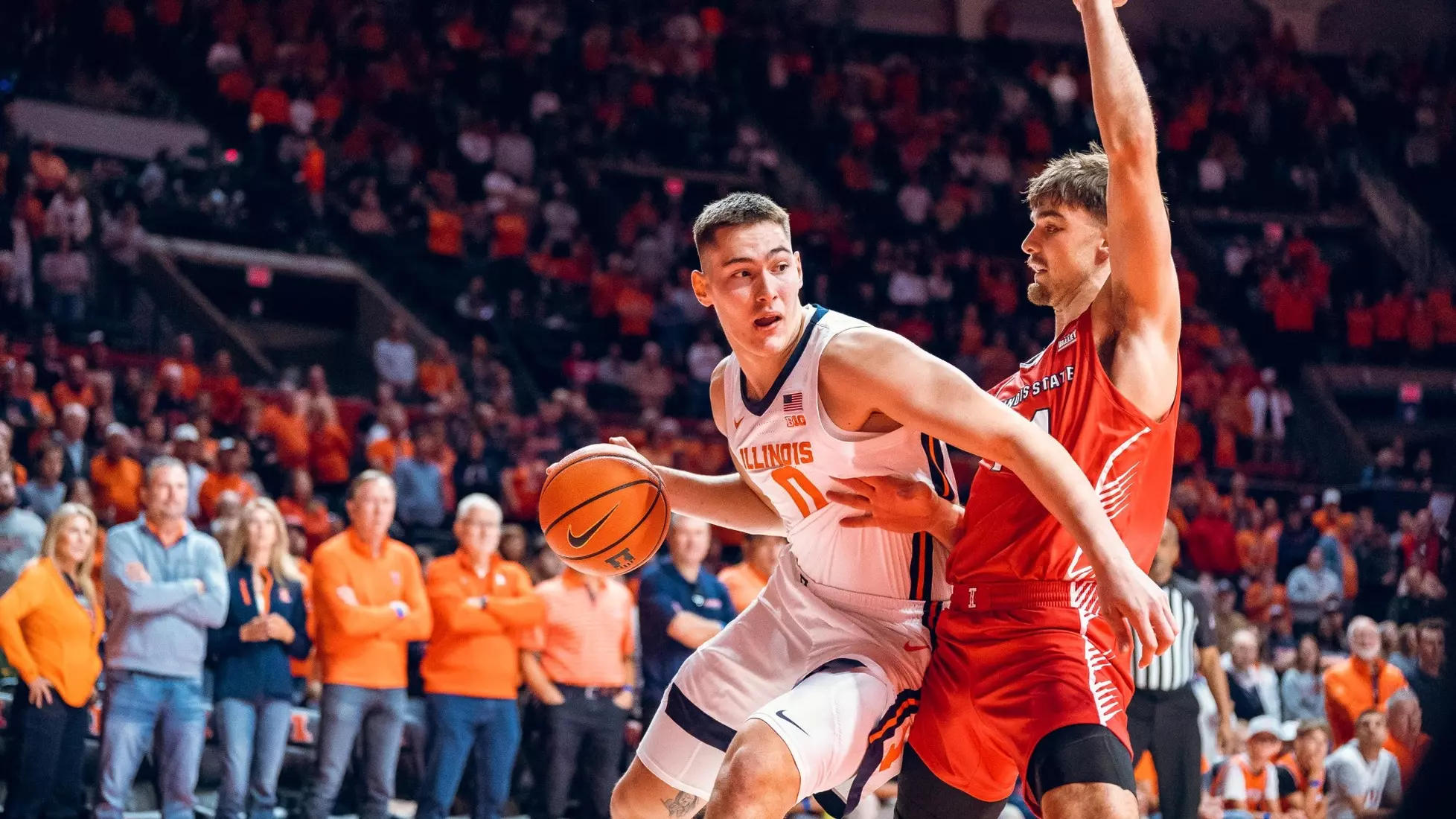
With the 2026-2027 season set to tip-off for Big Ten teams Monday night, TerrapinHoops takes a crack at trying to predict the order in which teams will finish before a single outcome is recorded.
National Title Contenders
1. Illinois
Top returners: David Mirkovic, Andrej Stojakovic, Tomislav Ivisic
Top newcomers: Stefan Vaaks (Providence), Quentin Coleman (freshman), Lucas Morillo (freshman)
Illinois is the most complete team in the league. Mirkovic, Stojakovic and Tomislav Ivisic all return as double-digit scorers, with Zvonimir Ivisic and Jake Davis also back from a Final Four team. The fascinating addition is Vaaks, who averaged 15.8 points in the Big East at Providence. Illinois loses lottery pick Keaton Wagler, but it has enough size, shooting and creation to compensate. The media poll overwhelmingly picked Illinois first, and Vaaks was voted preseason Big Ten Transfer of the Year.
Why No. 1: Best combination of established stars, continuity, shooting, size and newcomer talent.
2. Michigan State
Top returners: Jeremy Fears Jr., Coen Carr, Jordan Scott
Top newcomers: Anton Bonke (Charlotte), Jasiah Jervis (freshman), Ethan Taylor (freshman)
The gap between MSU and Illinois is tiny. Fears is the preseason Big Ten Player of the Year and gives Tom Izzo arguably the best point guard in the conference. Carr, Scott, Cam Ward and Kur Teng give MSU tremendous continuity. Bonke should help replace some of the departed interior production, while Jervis provides another scoring weapon.
Why No. 2: Elite point-guard play plus Izzo and an experienced core makes MSU the safest challenger to Illinois.
Big Ten Title Contenders
3. USC
Top returners: Rodney Rice, Alijah Arenas, Jacob Cofie
Top newcomers: KJ Lewis (Georgetown), Christian Collins (freshman), Eric Reibe (UConn)
This is where I’m departing from the media poll. I think USC has top-three talent. Rice is a preseason All-Big Ten caliber guard, Arenas is a potential 2027 NBA Draft breakout and Cofie gives Eric Musselman a proven frontcourt piece. USC then added Lewis, Reibe and a loaded freshman class featuring Christian Collins, Adonis Ratliff and Darius Ratliff. CBS also singled USC out as the conference’s most underrated team.
The concern is obvious: there are a lot of players who want the basketball.
Why No. 3: Maybe the deepest collection of perimeter talent in the conference outside Illinois. If Musselman gets the pieces to fit, USC can win the league.
4. UCLA
Top returners: Trent Perry, Eric Dailey Jr., Xavier Booker
Top newcomers: Filip Jovic (Auburn), Jaylen Petty (Texas Tech), Nikola Kusturica (freshman/international)
Perry could make a major jump after averaging 12.6 points and shooting nearly 44 percent last year. Dailey led UCLA in rebounding and Booker led the team with 43 blocks. Jovic, Petty and Kusturica give Mick Cronin additional scoring and versatility.
Why No. 4: There isn’t one overwhelming superstar, but UCLA has quality at virtually every position and enough returning defensive infrastructure to have a very high floor.
5. Michigan
Top returners: Elliot Cadeau, Trey McKenney, Roddy Gayle Jr.
Top newcomers: J.P. Estrella (Tennessee), Moustapha Thiam (Cincinnati), Jalen Reed (LSU)
Michigan is the defending national champion, and Cadeau/McKenney might be the league’s best returning backcourt tandem. But this is not last year’s Michigan. The Wolverines lost three lottery picks in Aday Mara, Yaxel Lendeborg and Morez Johnson Jr., plus Dusty May. Five-star freshman Brandon McCoy also suffered a season-ending ACL injury.
Why No. 5: Championship-level backcourt, but replacing an extraordinary frontcourt and an elite coach is enough for me to drop Michigan below USC and UCLA.
Upper-Tier NCAA Teams
6. Nebraska
Top returners: Pryce Sandfort, Braden Frager, Connor Essegian
Top newcomers: Trevan Leonhardt (Utah Valley), Sam Orme (Belmont), Kadyn Betts (Montana)
Sandfort is one of the best players in the conference and received 52 votes for preseason first-team All-Big Ten, behind only Fears. Nebraska also retains Frager and Essegian after the best season in program history. Fred Hoiberg has replenished the roster with an experienced transfer group.
Why No. 6: Sandfort gives Nebraska a legitimate star, and Hoiberg has enough shooting and offensive versatility to keep the Huskers in the upper tier.
7. Ohio State
Top returners: John Mobley Jr., A’mare Bynum, Josh Ojianwuna
Top newcomers: Anthony Thompson (freshman), Justin Pippen (California), Jimmie Williams (Duquesne)
This could be my sleeper. Mobley is already a preseason second-team All-Big Ten selection. Pippen adds another creator, and Anthony Thompson was voted the preseason Big Ten Freshman of the Year. Many believe Ohio State has nine or ten legitimate high-major rotation players compared with just six or so last season.
Why No. 7: Significantly deeper than last season, with a potentially excellent Mobley-Pippen-Thompson core.
NCAA Bubble/Upside Teams
8. Maryland
Top returners: Pharrel Payne, Andre Mills
Top newcomers: DJ Wagner (Arkansas), Baba Oladotun (freshman), Tomislav Buljan (New Mexico)
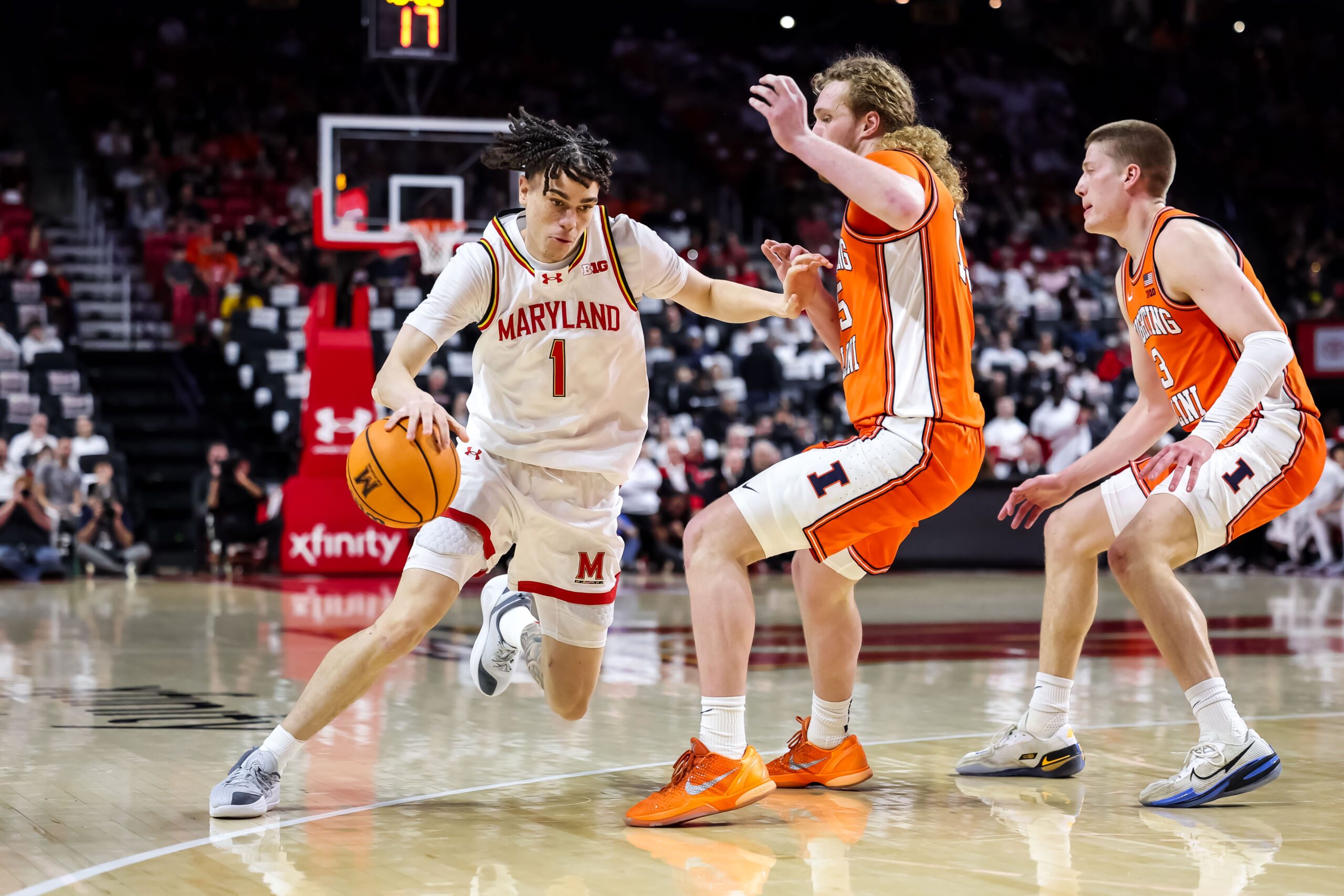
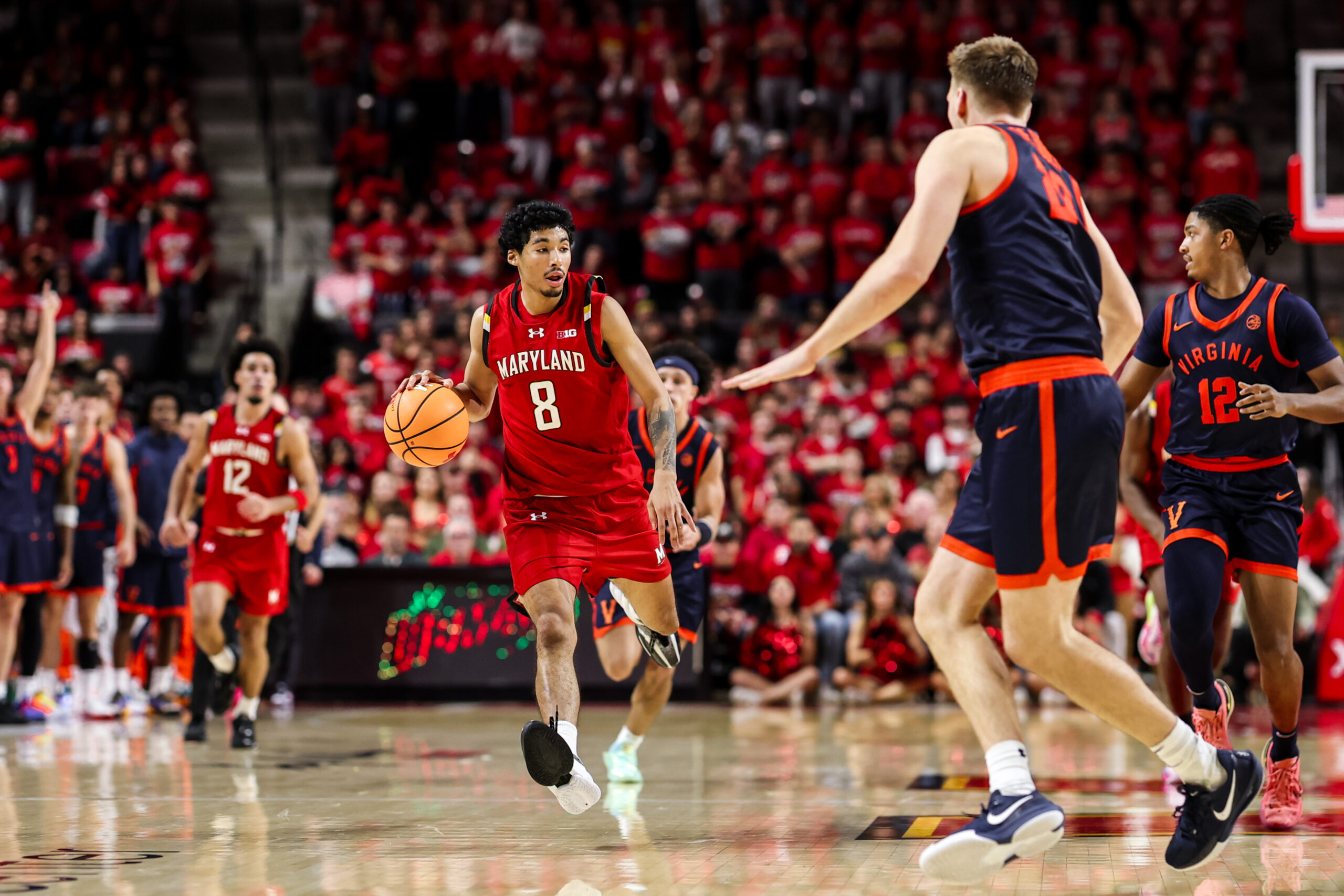
I think the Terps are better than their No. 12 media-poll position.
Payne averaged 17.5 points per game and is one of the league’s best returning big men. Mills provides continuity, while Buzz Williams completely reworked the supporting cast. Wagner gives Maryland a former elite recruit and experienced high-major guard; Buljan brings frontcourt skill; and five-star Baba Oladotun is the second-highest-rated recruit in Maryland history.
The swing factor is guard play. If Wagner can efficiently run the offense and Maryland gets credible perimeter shooting around Payne, this ranking could actually be conservative.
Why No. 8: Payne + Wagner + Oladotun gives Maryland a much higher talent ceiling than a typical eighth-place team, but there are enough new pieces that I want to see the perimeter offense function before moving the Terps into the top six.
9. Indiana
Actual returner: Trent Sisley
Top newcomers: Aiden Sherrell (Alabama), Markus Burton (Notre Dame), Samet Yigitoglu (SMU)
Also notable: Bryce Lindsay (Villanova), Jaeden Mustaf (Georgia Tech), Darren Harris (Duke)
Indiana is essentially a new basketball team. Only Sisley definitively returns from last year’s roster. But the talent upgrade is enormous. Sherrell was voted preseason second-team All-Big Ten. Burton can create off the dribble, Yigitoglu gives IU a 7-foot-2 presence, Lindsay can shoot and Mustaf gives them another downhill creator.
Why No. 9: The ceiling is probably top five. The floor is much lower because almost everybody is learning to play together.
10. Purdue
Top returners: Daniel Jacobsen, Omer Mayer, C.J. Cox
Top newcomers: Caden Pierce (Princeton), Luke Ertel (freshman), Jacob Webber (freshman)
For the first time in years, Purdue isn’t built around Braden Smith, Fletcher Loyer and Trey Kaufman-Renn. Jacobsen is an enormous 7-foot-4 building block and Mayer and Cox have shown flashes, but all three now have much larger responsibilities. Pierce is an interesting veteran addition after coming from Princeton.
Why No. 10: Matt Painter prevents me from dropping Purdue much further, but this is a genuine transition year rather than another obvious Big Ten-title roster.
11. Iowa
Top returners: Cam Manyawu, Cooper Koch, Tate Sage
Top newcomers: Ty’Reek Coleman (Illinois State), Andrew McKeever (Saint Mary’s), Ethan Harris (freshman)
Ben McCollum’s first Iowa team reached the Elite Eight, but replacing first-round pick Bennett Stirtz is an enormous task. Manyawu, Koch, Sage and Kael Combs give the Hawkeyes considerably more continuity than some teams around them.
Why No. 11: I trust McCollum and the returning structure. I don’t yet see the elite creator who replaces what Stirtz did.
12. Wisconsin
Top returners: Nolan Winter, Austin Rapp, Zach Kinziger
Top newcomers: Eian Elmer (Miami Ohio), Trey Autry (George Washington), Owen Foxwell (freshman)
Winter might be the best player on any team ranked this low; he received the most preseason All-Big Ten votes of any Wisconsin player and landed on the media’s second team. Rapp gives Greg Gard another established frontcourt option. The concern is creation after losing John Blackwell and the veteran backcourt production around him.
Why No. 12: Winter gives Wisconsin a high floor, but the Badgers need someone in that new perimeter group to emerge as a dependable creator.
Potentially Dangerous Teams
13. Minnesota
Top returners: Isaac Asuma, Jaylen Crocker-Johnson, Bobby Durkin
Top newcomers: Kyan Evans (North Carolina), Malachi Palmer (Villanova), Winters Grady (Michigan)
Niko Medved has some interesting pieces. Asuma gives Minnesota continuity at guard, Crocker-Johnson provides an interior presence and Evans could significantly improve the backcourt. Palmer is another potentially useful high-major transfer.
Why No. 13: Competitive roster and good coaching, but I’m not convinced Minnesota has enough high-end scoring to consistently beat the top half of the league.
14. Washington
Top returners: Wesley Yates III, Lathan Sommerville, Jasir Rencher
Top newcomers: Ryan Beasley (San Francisco), LeJuan Watts (Texas Tech), Parker Friedrichsen (Davidson)
Yates is the centerpiece. Beasley and Watts should give Danny Sprinkle more perimeter options, and Washington actually has enough talent to make this ranking look silly. But the Huskies lost a huge amount of last year’s production, including first-round pick Hannes Steinbach.
Why No. 14: Intriguing guards, but too much turnover and not enough proven Big Ten production around Yates.
15. Oregon
Actual returner: Sean Stewart
Top newcomers: Fred Payne (Boston College), Tajh Ariza (freshman), Dwayne Aristode (Arizona)
Also notable: Tyrone Riley IV (San Francisco), Jerry Easter II (USC), Andrew Meadow (Boise State)
Oregon might be the league’s biggest wildcard. Almost the entire roster changed, and Dana Altman retired shortly before the season, leaving Tony Stubblefield in charge. Ariza has legitimate star upside and the Ducks collected plenty of talent through the portal.
Why No. 15: There’s enough individual talent to finish much higher, but essentially zero continuity combined with a late coaching change is a massive red flag.
The Rest
16. Rutgers
Top returners: Tariq Francis, Jamichael Davis, Darren Buchanan Jr.
Top newcomers: Darin Smith Jr. (Central Connecticut State), Christian Gurdak (Virginia Tech), Lewis Duarte (New Mexico State)
Francis is the player everything revolves around, while Davis and Buchanan provide some welcome continuity. Smith gives Rutgers another potential scorer and Gurdak adds size.
Why No. 16: There is enough backcourt experience to be annoying, especially at Jersey Mike’s Arena, but the overall offensive ceiling looks limited compared with most of the league.
17. Northwestern
Actual returners: Jake West, Angelo Ciaravino
Top newcomers: Jack Karasinski (Bellarmine), LA Pratt (Northeastern), Colin Smith (UC Santa Barbara)
This is basically a reconstruction after losing Nick Martinelli and a huge chunk of the roster. Karasinski is especially important because Northwestern desperately needs someone to become a primary scorer.
Why No. 17: Chris Collins can make Northwestern unpleasant to play against, but there just isn’t enough proven Big Ten offense here yet.
18. Penn State
Top returners: Ivan Juric, Reggie Grodin, Jamison White
Top newcomers: Jay Rodgers (Central Connecticut State), Brant Byers (Miami Ohio), Roberts Blums (Davidson)
Juric is the most important returning piece, while Rodgers, Byers and Blums constitute a major backcourt makeover. Mike Rhoades needs those transfers to dramatically increase Penn State’s ability to create good shots.
Why No. 18: Too little proven high-level production compared with the other 17 rosters. There are ways Penn State can be better, but someone has to emerge as a legitimate Big Ten-level offensive centerpiece.