
Maryland came tantalizingly close to delivering its first signature victory of the season Friday night.
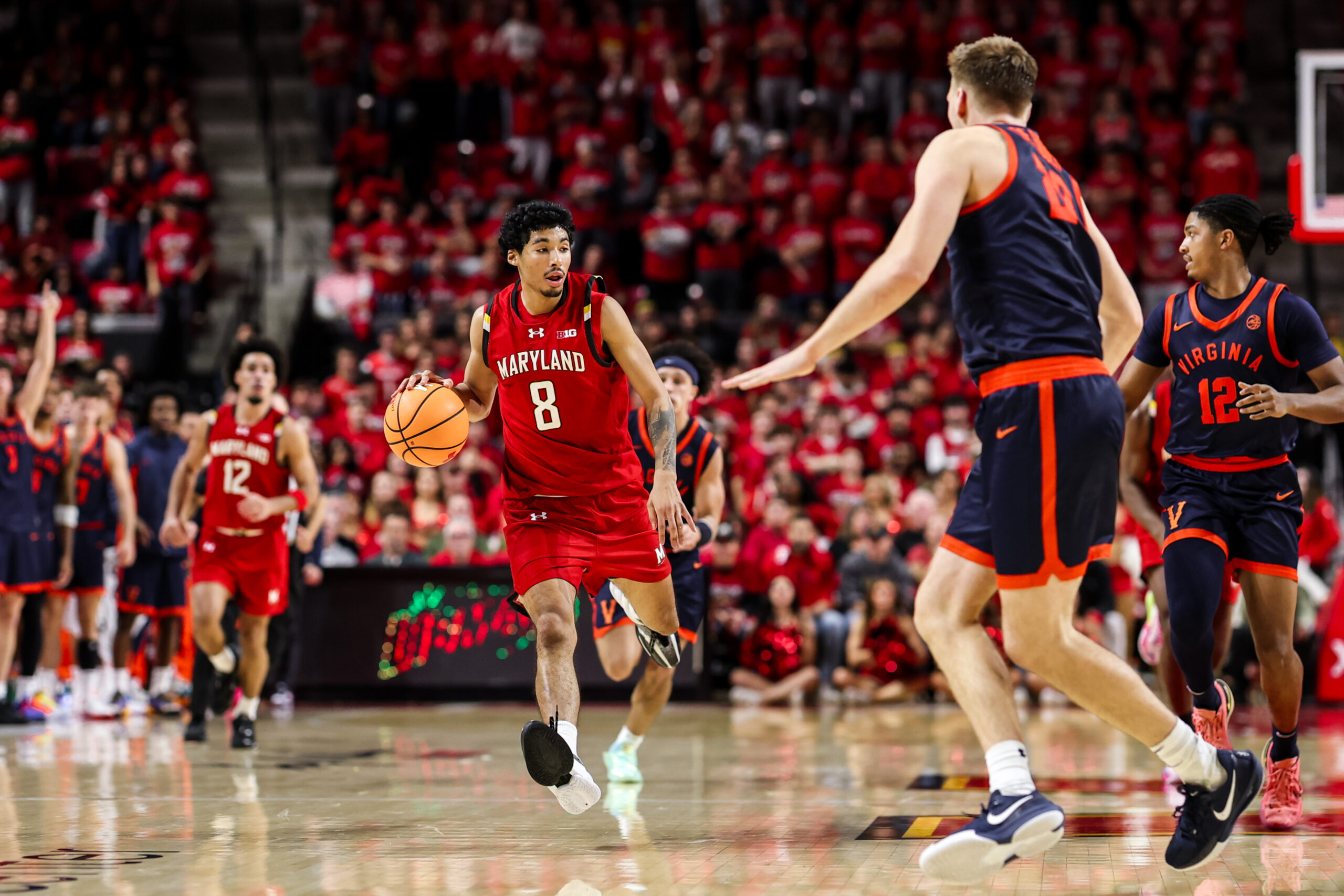
The Terrapins led No. 6 Virginia by 11 points at halftime and controlled much of the game before the Cavaliers rallied for an 87-83 victory at XFINITY Center.


Unlike Maryland’s disappointing performance against Georgetown six days earlier, Friday’s loss offered considerably more reasons for optimism. The Terps were more competitive, more physical and more effective at creating scoring opportunities.
But the game also exposed several issues that could determine how quickly Buzz Williams’ team develops.
Here are five takeaways from Maryland’s second loss of the season.
Kaden House is becoming impossible to ignore
Three games into his college career, House is making a compelling case for an expanded role.
The freshman scored 17 points in 28 minutes off the bench, making nine of his 10 free throws while adding three rebounds and three assists.
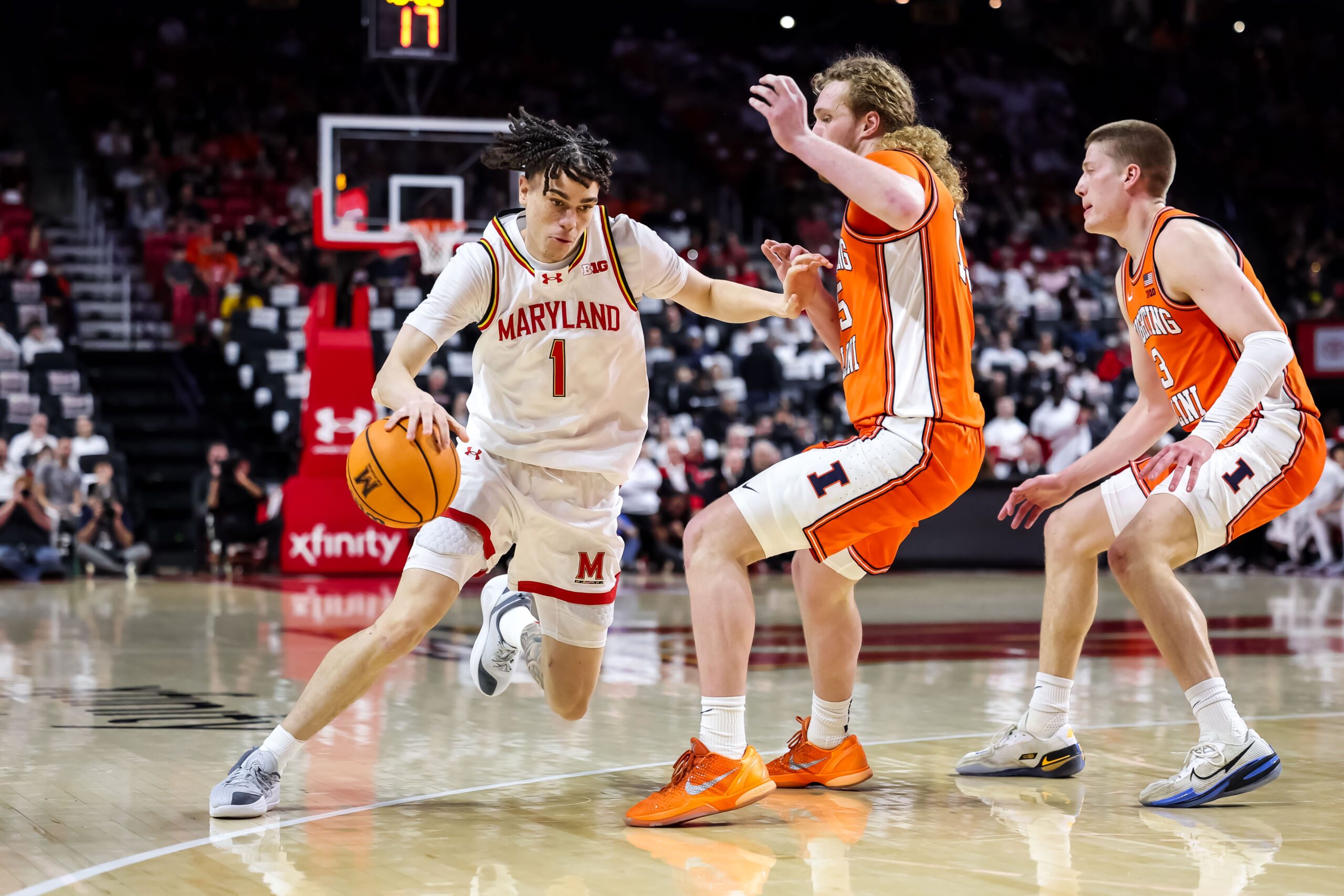
House’s ability to attack defenders off the dribble has quickly become one of Maryland’s most valuable offensive weapons. He doesn’t need to make perimeter shots to generate offense, and his aggressiveness consistently puts pressure on opposing defenses.
After scoring 13 points against Georgetown, House followed with another productive performance against significantly better competition.

His emergence also raises an interesting question about Maryland’s rotation. House played more minutes than starting guards Andre Mills and Bishop Boswell against Virginia, and his offensive production has been difficult to overlook.
Williams may prefer bringing House off the bench, but the freshman is already demonstrating that he deserves significant playing time regardless of whether he starts.
Maryland’s three-point shooting isn’t getting any better
The Terrapins showed improvement in several areas against Virginia. Perimeter shooting wasn’t one of them.
Maryland finished 4-for-17 (23.5 percent) from beyond the arc after making just three of 20 attempts against Georgetown.
Over those two games, the Terps are shooting a combined 7-for-37 (18.9 percent) from three-point range.
Mike McNair Jr. provided a much-needed boost Friday, connecting on three of his six attempts from deep. Unfortunately, the rest of the roster combined to shoot just 1-for-11.
Mills continued to struggle, finishing 0-for-4 from three and 2-for-13 overall. D.J. Wagner attempted only two three-pointers, making one, while House missed both of his attempts.
The concern extends beyond percentages. Without reliable perimeter threats, Maryland’s offense becomes increasingly dependent on attacking the basket, drawing fouls and generating second-chance opportunities.
Those are legitimate strengths, but they also make the Terps easier to defend when opponents can pack the paint without fearing consistent outside shooting.
Maryland doesn’t need to become a prolific three-point shooting team. It does, however, need enough perimeter production to create space for its interior scorers.
The bench is beginning to reshape Maryland’s rotation
Maryland’s reserves outscored its starters 42-41 against Virginia, a striking statistic considering the caliber of the opponent.
House led the second unit with 17 points, McNair added 15 and Tomislav Buljan contributed eight points and six rebounds.
Together, those three accounted for 40 of Maryland’s 83 points.
Meanwhile, the starting backcourt of Wagner, Mills and Boswell combined for just 17 points on 7-of-24 shooting.
Wagner did contribute five assists with only one turnover, but the disparity in scoring production was difficult to overlook.
McNair’s performance was particularly encouraging after he went scoreless in 22 minutes against Georgetown. He played just 18 minutes Friday but gave Maryland the perimeter shooting it had been missing.
Buljan also provided efficient minutes, making both of his field-goal attempts and leading the team in rebounding.
It’s still early, and Williams is working with a roster featuring numerous new pieces. But the performances against Virginia suggest that Maryland’s most effective lineup combinations may look different from those that opened the season.
Pharrel Payne needs more help on the glass
Payne continues to establish himself as Maryland’s most dependable scorer, but his rebounding production against Virginia was surprisingly limited.
The senior center finished with 20 points on 6-of-10 shooting and made eight of his 10 free throws. However, he collected just three rebounds in 34 minutes.
Virginia outrebounded Maryland 35-26, including a 27-16 advantage on the defensive glass.
Buljan led the Terps with six rebounds despite playing only 22 minutes. Boswell added four, while no other Maryland player grabbed more than three.
The contrast with Georgetown was significant.
Against the Hoyas, Payne collected eight rebounds, including seven offensive boards, while Maryland won the overall rebounding battle 37-27.
Against Virginia, the Terrapins struggled to control the glass despite another physical effort.
Maryland still generated 17 second-chance points from 10 offensive rebounds, but its inability to consistently secure defensive rebounds contributed to Virginia’s offensive efficiency.
Payne doesn’t need to dominate the glass every night, but Maryland’s frontcourt must provide more consistent rebounding support, especially against opponents with size and athleticism.
Maryland’s ability to create extra possessions is a legitimate strength
Perhaps the most encouraging statistical development against Virginia was Maryland’s ability to generate additional offensive opportunities.
The Terrapins forced 17 turnovers while committing only 10 themselves, recording 10 steals and holding a 24-15 advantage in points off turnovers.
Maryland also generated 17 second-chance points compared with Virginia’s eight.
Those advantages helped compensate for a significant disparity in shooting efficiency.
The Terps attempted four more field goals than Virginia and earned 12 more free-throw attempts, finishing 31-for-39 at the line.
That combination of aggressive defense, offensive rebounding and free-throw production provides Maryland with a recognizable identity.
The problem was converting enough of those opportunities into points.
Virginia shot 62.3 percent from the field, compared with Maryland’s 42.1 percent, and made nine more baskets despite attempting fewer shots.
Maryland isn’t likely to encounter many opponents that shoot as efficiently as Virginia did Friday, particularly in the second half.
But the Terps’ ability to force turnovers and manufacture extra possessions should translate against a wide range of opponents.
If Maryland can pair those strengths with even modest improvement in perimeter shooting and overall offensive efficiency, its formula becomes considerably more effective.
The bottom line
Maryland’s loss to Virginia was disappointing, but it represented a significant improvement over the performance against Georgetown.
The Terrapins demonstrated they could compete physically with an elite opponent, create extra possessions and generate offense through aggressive drives and free-throw opportunities.
House’s emergence, McNair’s perimeter shooting and the production of Maryland’s bench were encouraging developments.
Still, the concerns are becoming familiar. Maryland needs more consistent three-point shooting, better rebounding from its frontcourt and greater offensive efficiency from its starting guards.
The challenge for Williams is turning the encouraging stretches into sustained performance while continuing to establish a reliable rotation.
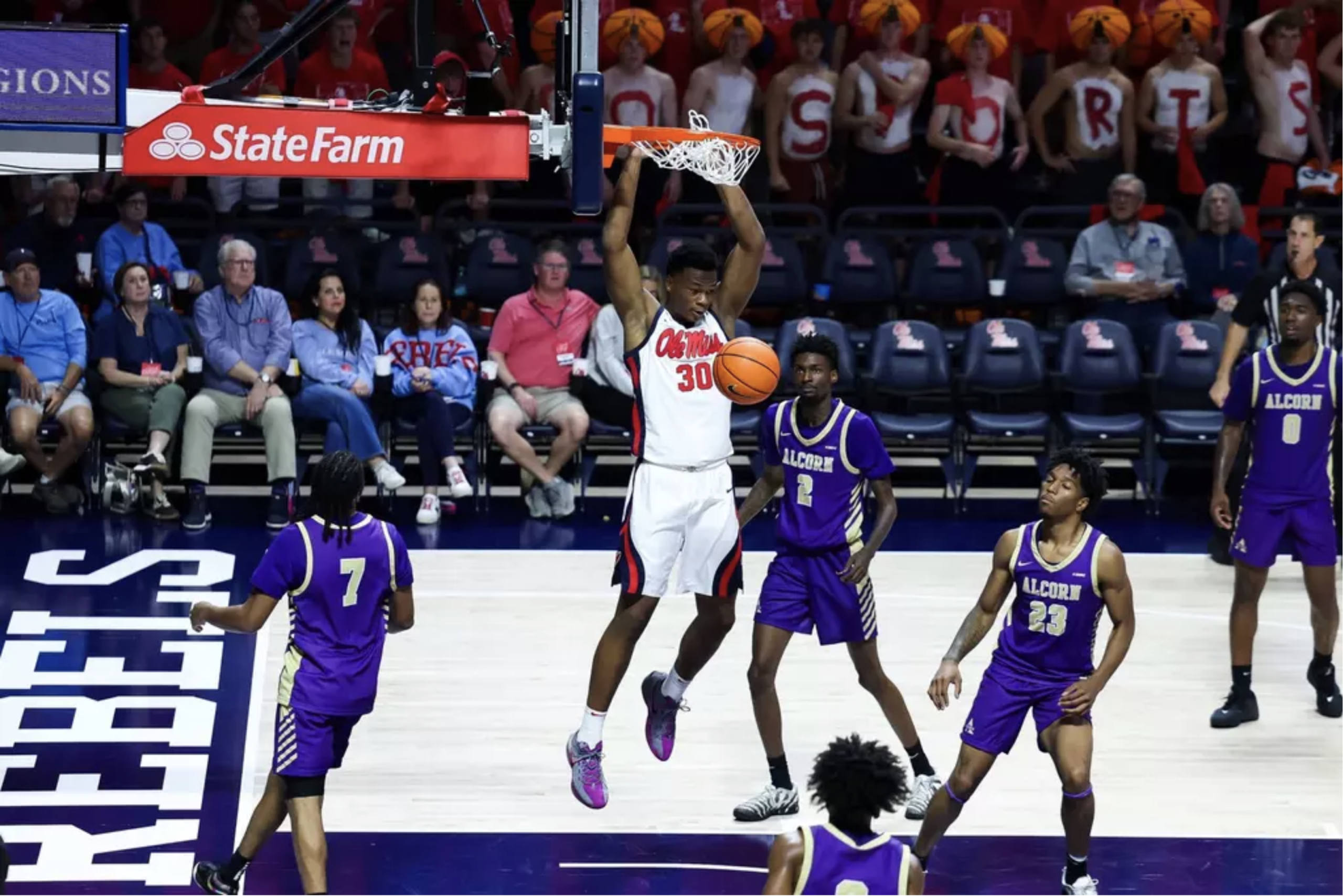
The Terps return to XFINITY Center on Monday against Alcorn State, where they’ll have an opportunity to build on the positives while addressing the weaknesses exposed in their first two losses.